Risk management for Emergency Services with fortControl
Emergency services operate with a high level of professionalism, standardisation and clearly defined procedures across many areas. At the tactical and strategic level, however, risk and security processes are still often managed and documented using analogue methods such as Excel spreadsheets and Word documents. Consistently digitalising these traditionally analogue management tools allows decisions to be made more quickly and flexibly — and above all more collaboratively — as all stakeholders work with the same up-to-date information and can continuously refine it together. This is where fortControl comes in. The platform brings additional structure and accountability to integrated security management. A task that is often treated as a secondary, paper-based management activity becomes a fully integrated, digitally supported leadership process — extending the high level of professionalism seen in operational work to the management and governance level. Learn more and visit us at SPIK 2026 (Booth 19).
From Paper to Platform: How fortControl Digitalises Risk Management for Emergency Services
Emergency services operate with impressive precision at the operational level: clear procedures, defined roles and standardised processes. At the tactical and strategic level — where risks, dependencies and priorities are managed — analogue approaches still dominate in many organisations: Excel spreadsheets, Word documents and isolated notes.
fortControl aims to change this. The Swiss platform brings structure, accountability and agility to integrated risk management and enables leadership processes to be managed digitally, transparently and collaboratively.
In this interview, Rolf Wagner explains how emergency services can strengthen decision-making and further develop their professional practices.
Rolf, why is structured digital risk management particularly important for emergency services?
Because decisions need to be robust not only during operations, but also in preparation and governance. Analogue methods are often too rigid, too fragmented or simply not up to date.
With fortControl, risks, responsibilities and measures can be structured digitally so that everyone works on the same data basis. This improves visibility, transparency and speed at the same time.
What distinguishes fortControl from traditional spreadsheets or documents?
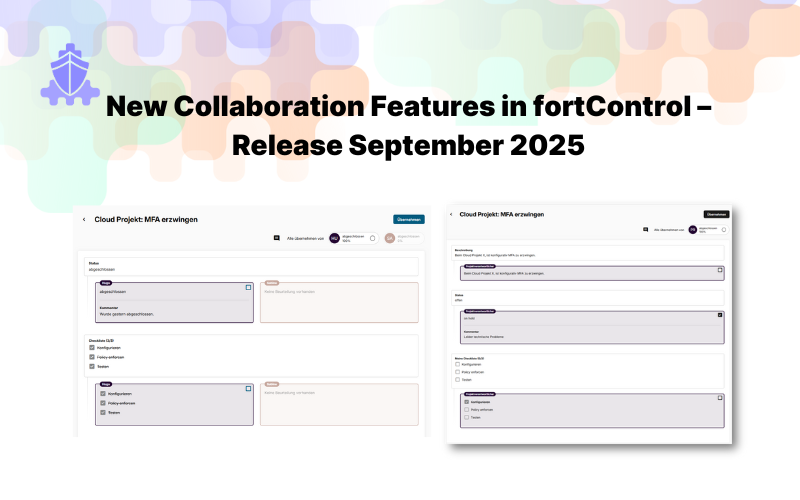
Above all, the ability to manage collaborative review processes digitally.
For example, in many organisations several risk owners first reassess their respective risks. A risk manager then consolidates these assessments before a decision-maker performs the final approval.
fortControl maps these multi-stage processes entirely digitally, with clear responsibilities, traceable comments and automated workflows. This makes the overall process more efficient, transparent and audit-ready.
How does this work in practice in a real operational organisation?
All roles involved — whether subject-matter owners, risk managers or leadership — work with the same up-to-date information. Every revision and every decision is documented systematically.
This means no parallel work in multiple files, no loss of information and no manual updates. Instead, a shared overview emerges — a common operational picture that everyone understands and uses.
Many security and governance systems have grown over time and can be complex. How does fortControl fit into existing structures?
fortControl adapts to the organisation's existing structure — not the other way around.
Processes, responsibilities and reporting lines can be modelled flexibly and digitalised step by step. The platform helps standardise existing workflows without making them more complicated.
The result is a system that respects established structures while making them future-ready.
What does this mean for day-to-day leadership work?
Leaders have access at all times to a consistent overview of risks and initiated measures:
- Which risks are currently being processed?
- Which have been approved?
- Where are bottlenecks emerging?
This transparency not only supports faster decisions but also improves the quality of discussions. fortControl helps establish a culture of traceability and shared responsibility instead of isolated individual contributions.
Finally, what is the most significant change fortControl brings?
It transforms what is often a paper-based management task into an integrated, digitally supported leadership process.
Risks are no longer simply documented — they are actively managed. Decisions become transparent, collaborative and data-driven.
This extends the level of professionalism that emergency services already demonstrate in daily operations to the governance and strategic level.
And last but not least, fortControl makes the important leadership task of risk management more engaging.

Rolf Wagner
Information Security Management enthusiast.

.png)